
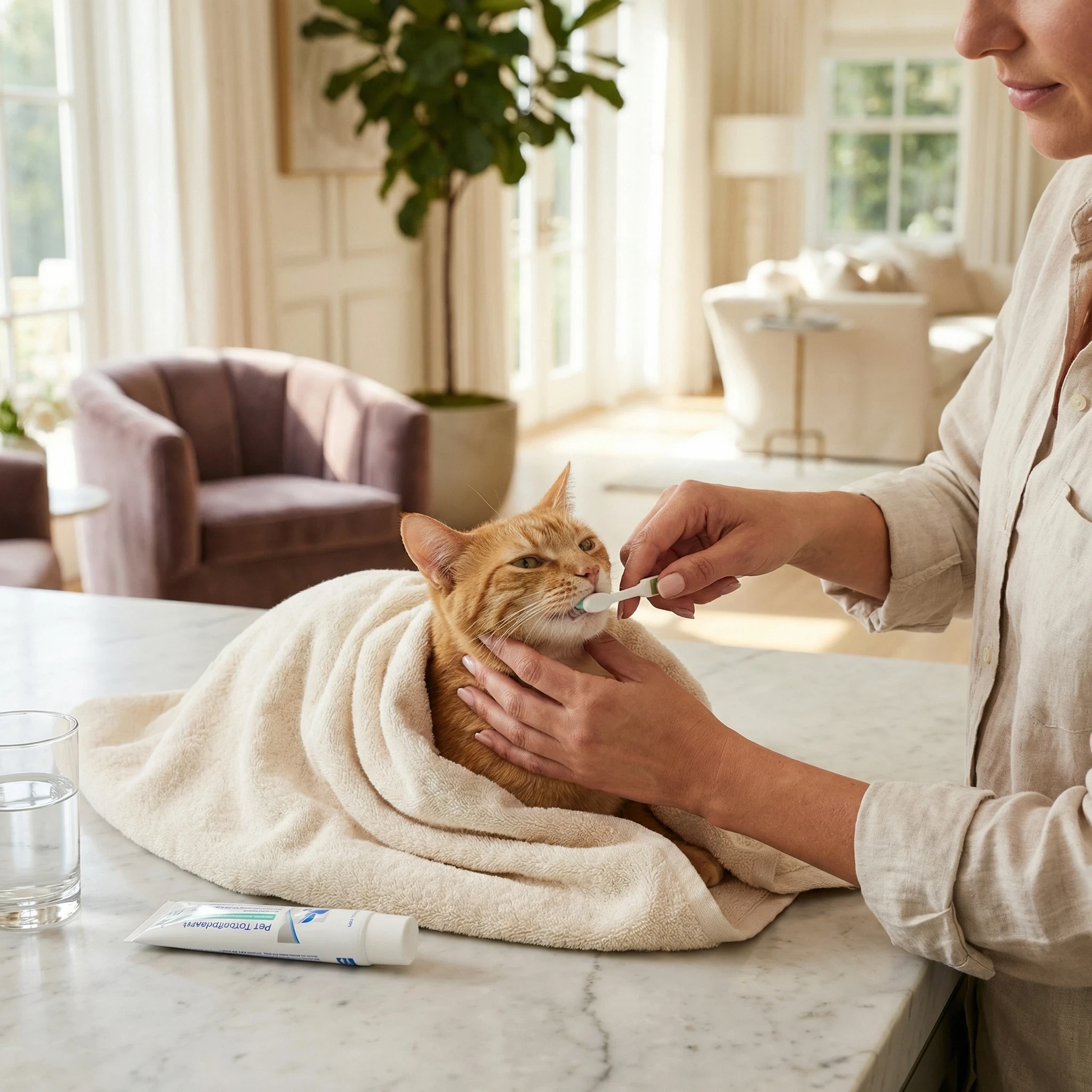
When we’re talking about cats, keeping their mouths clean is a big deal. Cats, like us, need proper oral hygiene to steer clear of troubles like gum disease and tooth decay. These problems aren’t just about a funny-smelling breath; they’re linked to serious health concerns. Catching these issues early can save a lot of pain for both you and your cat.
Getting the right tools makes all the difference. A cat toothbrush or a finger brush works wonders. They’re specifically designed to fit into a small cat’s mouth without causing discomfort. Combine that with dental wipes for days when more thorough brushing isn’t possible, and you’ve got a solid foundation for daily care.
The toothpaste you pick matters too. Human toothpaste is a no-go since cats can’t spit it out, and it contains ingredients harmful to them. Opting for a cat-friendly toothpaste with flavours like chicken or tuna can make the whole brushing routine more palatable for them—and probably easier for you.
Dental chews and toys offer an engaging way to help maintain oral health. While they’re playing and munching, these items work to reduce plaque and tartar. It’s hard to say no to something that’s both useful and fun. Cats love them, and they often don’t realise they’re actually doing something good for themselves.
There’s always the question of whether to do it at home or ask a professional. Routine at-home cleanings are great, but sometimes professional dental cleaning is necessary—especially if you’re spotting signs of dental trouble like red gums or drooling. Regular vet check-ups help catch these signs and can offer peace of mind that your kitty’s teeth are in top shape.
Creating a chilled-out atmosphere during at-home cleaning sessions helps both you and your cat. Use gentle tones, take breaks as needed, and perhaps offer a little treat afterwards to build positive associations. They might not start loving the toothbrush, but they’ll tolerate it, which is a win.
Cats often aren’t too obvious about their discomfort, but certain behaviours can clue you in. If your cat’s refusing food, pawing at their mouth, or suddenly backing away from head pats, it’s time to take a closer look at what’s going on inside their mouth. Catching these early can mean the difference between a small hiccup and a big deal down the line.
Our Website contains affiliate links. This means if you click and make a purchase, we may receive a small commission. “Don’t worry, there is no extra cost to you. It’s a simple way you can support our mission to bring you quality content.