
Understanding your cat’s dietary needs is like solving a little feline puzzle. Each cat is unique, with specific nutritional requirements that can change based on age, health status, and even personality traits. Before changing their food, take the time to research your particular breed’s specific needs and consider factors such as any known allergies or health conditions that may be affected by a change in diet.
Making a slow transition isn’t just a suggestion—it’s crucial for your kitty’s well-being. A sudden switch can lead to tummy troubles or a flat-out food strike. Ideally, you want this shift to be as smooth as possible to avoid any digestive woes or behavioural hiccups.
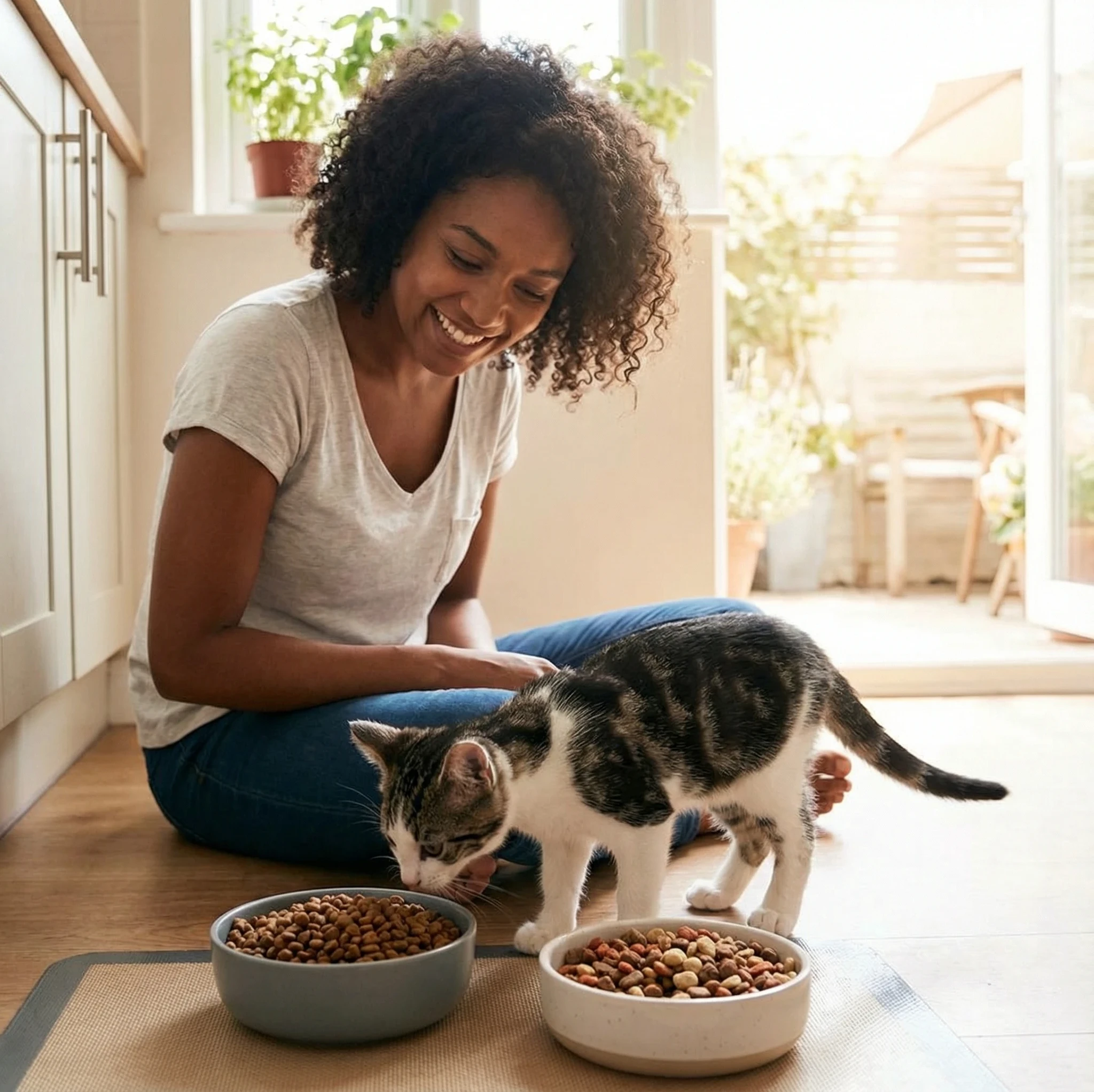
Creating a clear transition plan can be your secret weapon. Start slow by mixing 25% of the new food with 75% of the old food. Over the next 7-10 days, gradually increase the new food each day until it’s the only thing in their bowl. This gives your cat’s digestive system time to adjust and can help spot any adverse reactions early.
Paying attention to your cat’s body language and eating habits during this process helps you stay on top of any issues. Some cats might give you the classic “what’s this?” look at first. But stay observant—changes in eating habits, energy levels, or litter box use can all be signs of how they’re handling the swap.
If your cat seems resistant or shows signs of an allergy, don’t panic. It might be tempting to just stop the new food altogether, but give it time, unless there’s a severe reaction, of course. Consult your vet if you’re worried, as they can offer professional advice tailored to your little buddy’s needs.
Your vet plays a really big role in this change. They can help ensure that the new food meets all nutritional standards and is a good fit for any health issues or special needs your cat might have.
To make the new grub extra enticing, think about warming it up a bit to enhance the aroma or mix in a small amount of water to improve the texture. Sometimes even the finickiest eaters can be won over with these small tweaks!
Embracing this change could mean a real boost in your cat’s health and vitality. With the right approach, you might notice a shinier coat, more energy, and an overall happier cat. That’s always a win in my book!